
From Healthy Resilient Homes to Cities: San Francisco is Ready for Neighborhood-scale Decarbonization
September 2026
California Building Power Network members (BPN) gathered in early August to tour working-class homes and community centers in San Francisco’s Mission District that are at the forefront of the transition to all-electric buildings, thanks to the Healthy Resilient Homes (HRH) campaign. The event showcased the power of peer learning when groups are organized into a cohort, as BPN members (and several other attendees) got to see what building electrification and decarbonization looks like and hear what the local team learned in the process of completing the novel demonstration projects. With representatives from the gas company and state utility commission present too, it was also an opportunity to flex the cohort’s muscle in making the case that members are ready and able to test residential decarbonization at the neighborhood scale under California’s new zonal decarbonization pilot program.
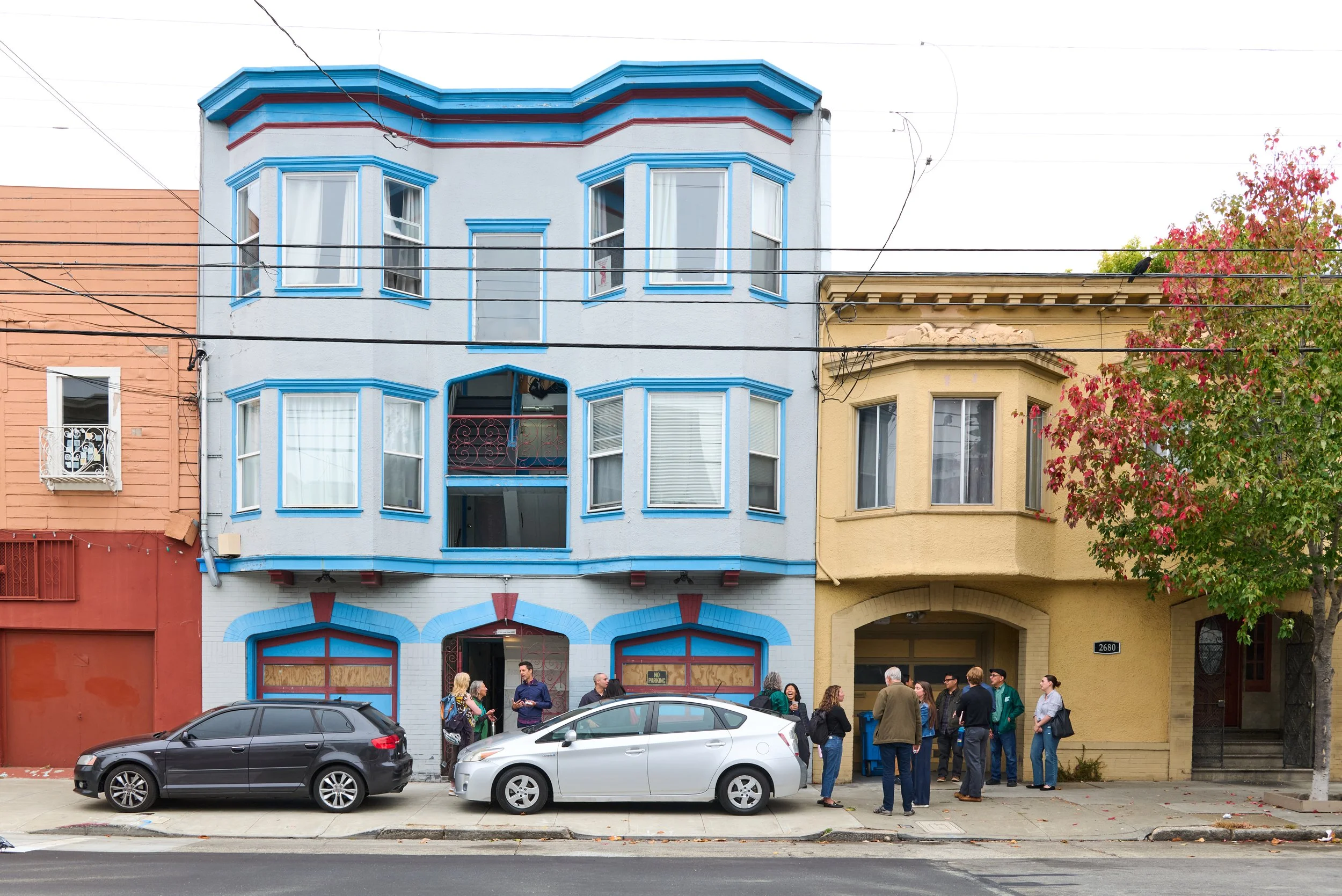
The first stop on the tour was at a 4-unit, multifamily building on Bryant Street owned by Amparo Vigil, a community leader and a member of PODER, which is a longstanding environmental justice organization based in the Mission. Amparo was motivated to be a decarbonization demonstration site by the health and climate benefits associated with quitting natural gas use and the opportunity for her community of mostly working-class, Latinx immigrant families to be leaders in adopting new, cleaner energy technologies at home. She cried tears of joy the day the utility company, PG&E, cut the gas off to her building. Now, PG&E is not paying to upkeep this expensive gas service line on the back of ratepayers—the utility spends about $600MM annually on service line replacements (https://www.nrdc.org/bio/kiki-velez/break-your-gas-utility#bill).
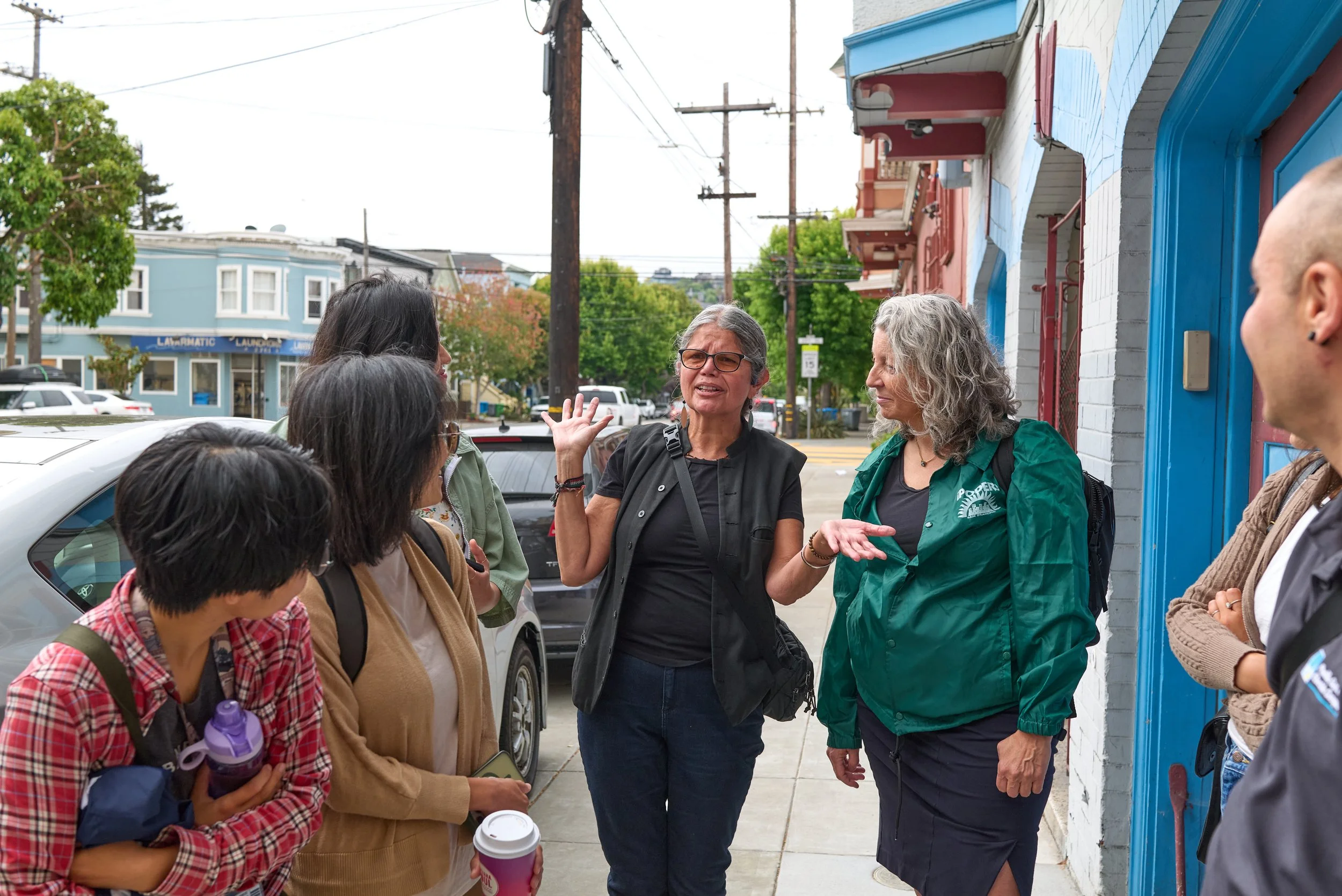
Amparo Vigil (center) welcomes us to her home; standing next to Amparo in the green jacket is Chris Selig, Healthy Resilient Homes campaign director with PODER.
San Francisco’s Environment Department (SFE) has been a major partner on the electrification and decarbonization projects in the Mission, and is part of the local BPN team—along with PODER, Emerald Cities Collaborative (ECC) Northern California, and the San Francisco Public Utilities Commission (SFPUC)—working to bring a zonal pilot project to the neighborhood. SFE brings not only critical resources like technical expertise, funding, and convening power to the partnership, but also a commitment to advancing building decarbonization equitably, as exemplified by the city’s Climate Equity Hub. This is the model of co-governance that BPRC champions, by which public institutions build and show capacity to deliver real and meaningful improvements to people’s everyday lives, now and for the future. To deepen that institutional capacity, SFE and SFPUC are scheduling another tour for September, this time for colleagues in other departments expected to play a bigger role in neighborhood-scale decarbonization projects (namely, the city’s Planning Department and SFPUC’s program team).
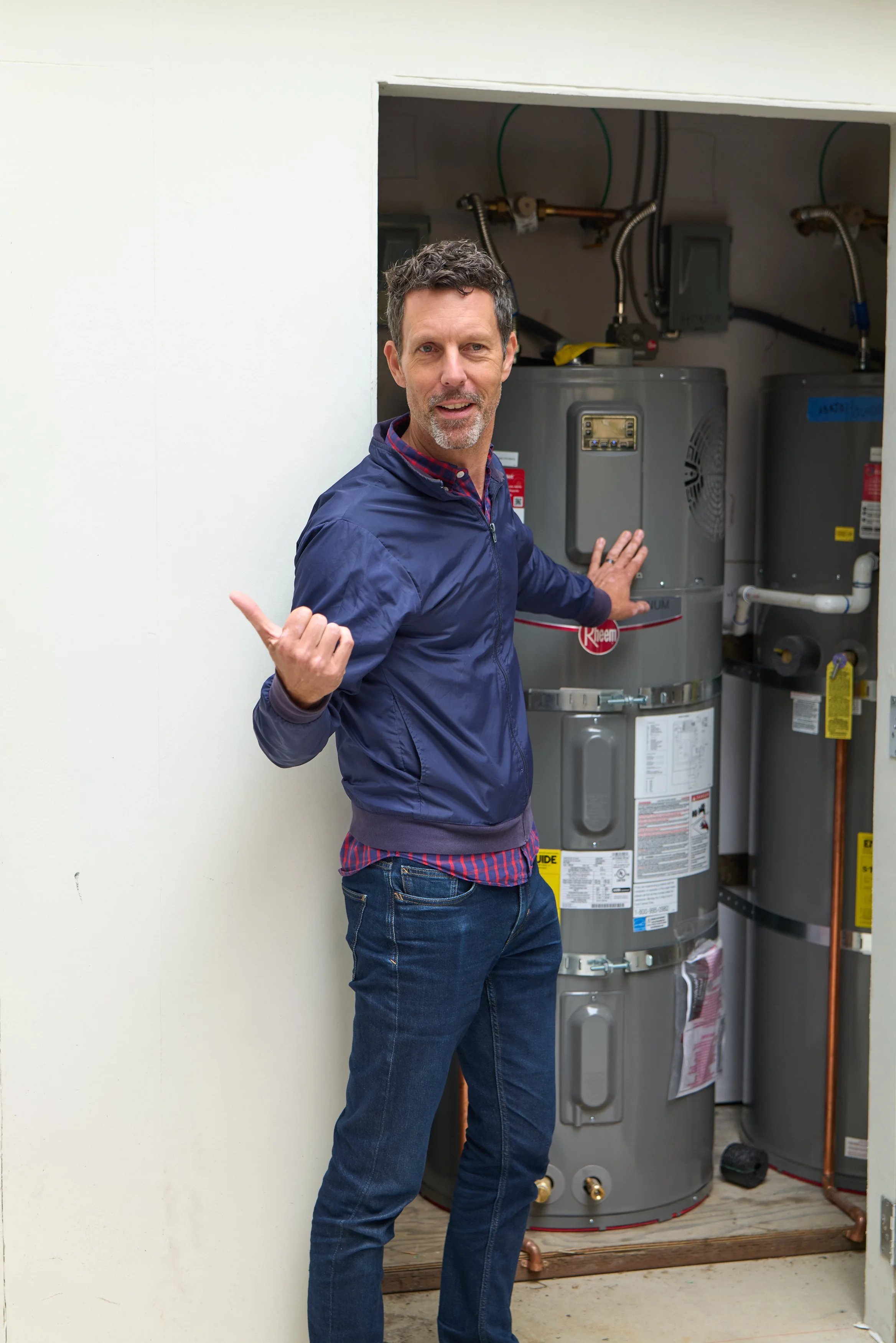
Nik Kaestner (Senior Building Decarbonization Coordinator, SFE) explaining the efficiency advantages of heat pump water heaters (left)…
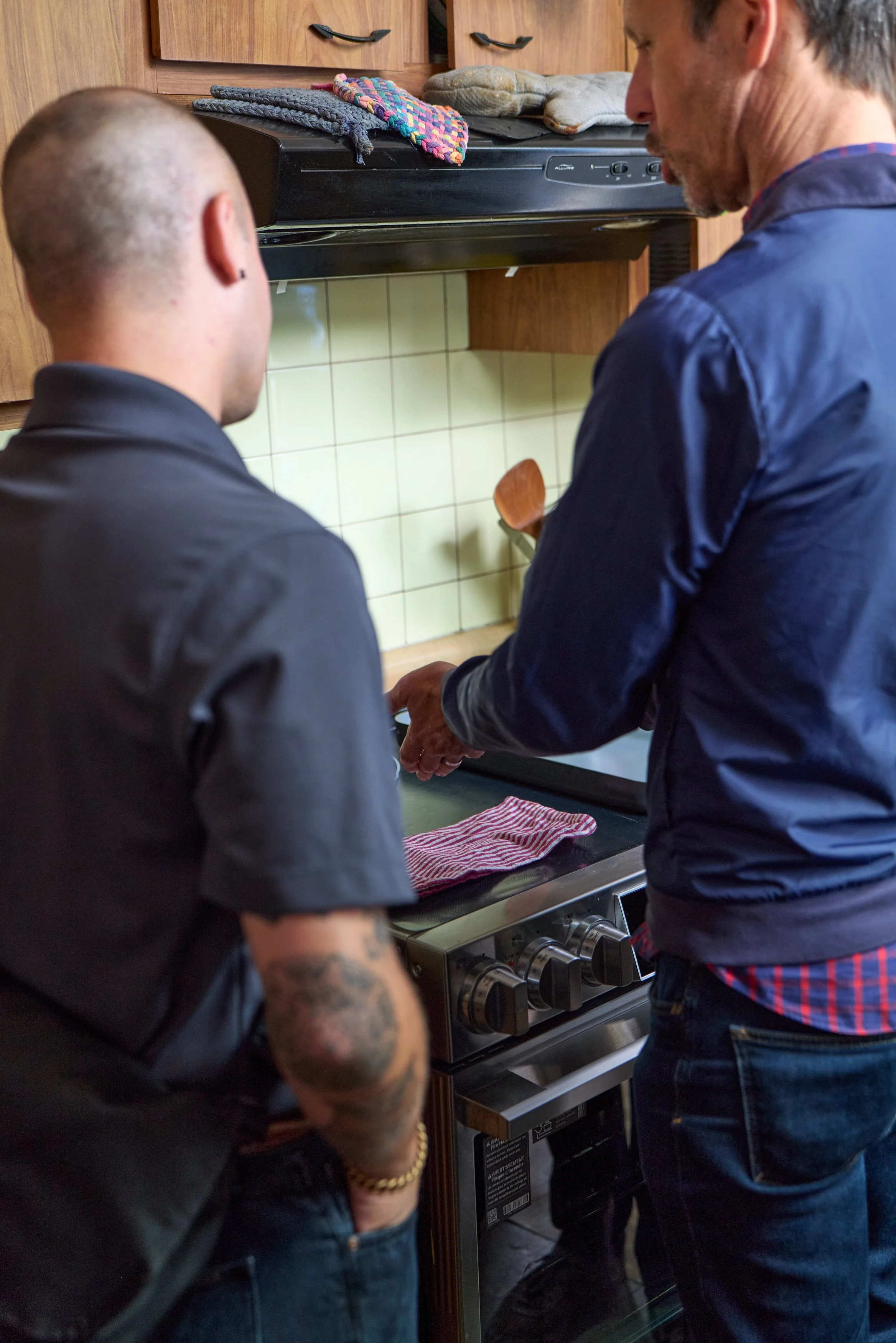
…and induction stovetops (right).
Cohort members got to meet and talk with Eric Russo, PG&E’s new lead for the zonal decarbonization pilot program. Eric was impressed by the San Francisco team’s deep community-government collaboration and their dedication to overcoming challenges faced during project implementation, from dealing with new equipment that didn’t work to redesigning the project in order to take advantage of incentive programs. He left the tour with greater appreciation for the unique role local, community-based organizations (CBOs) throughout the process, to make sure projects are designed appropriately and that residents ultimately are satisfied with the results.
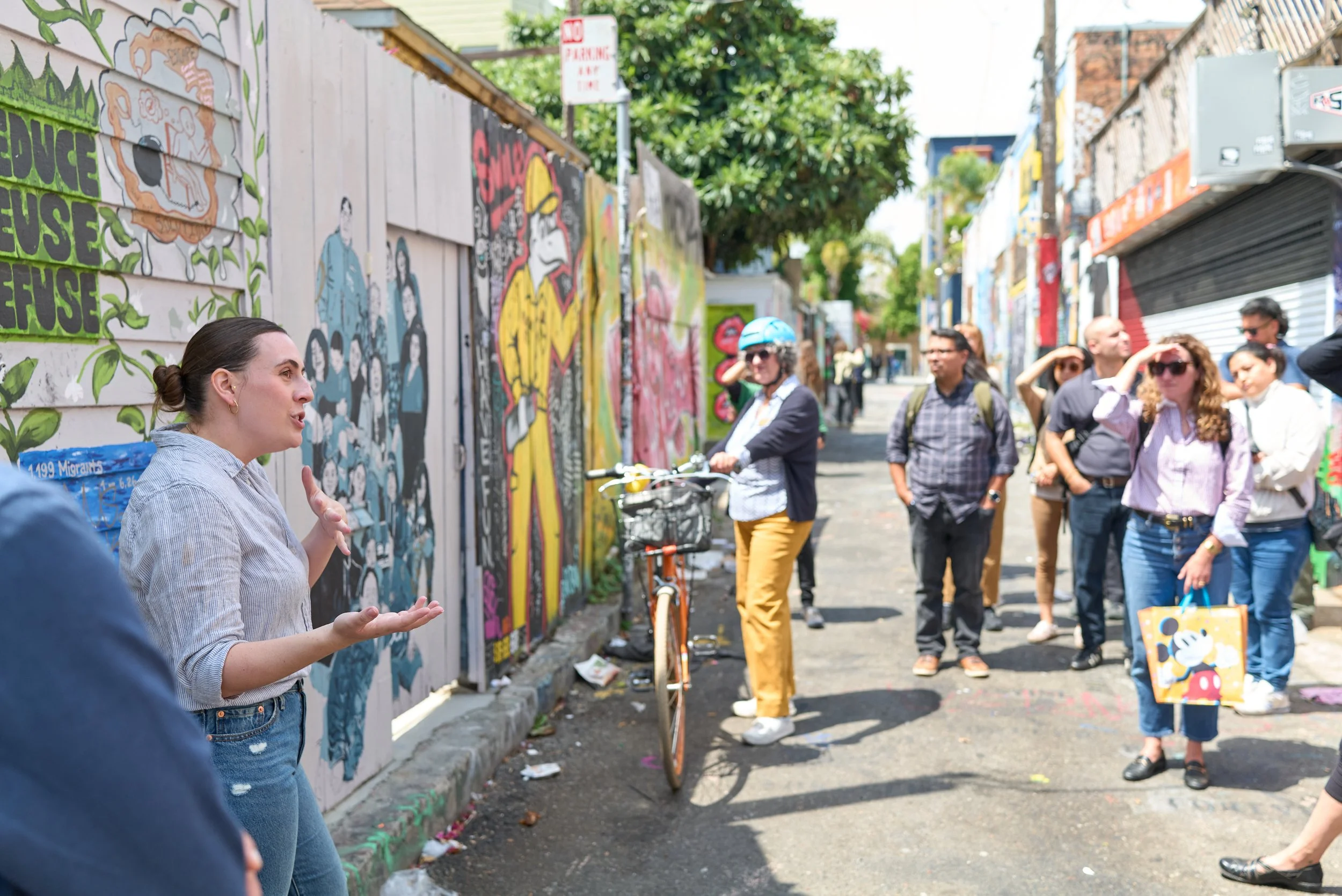
Megan Leary (Emerald Cities Collaborative - Northern California) shares lessons learned from the decarbonization project of a 5-unit multifamily building on Sycamore Street in the Mission.
The second stop on the tour was the Women’s Building, a community institution serving the Mission since 1979. The Women’s Building has a campaign “Powering our Future” to fully decarbonize their building and become a resilience center for the neighborhood—turning the community-serving institution into not only a place for social services, but a place for shelter and safety in increasing extreme weather events caused by climate change. The HRH campaign worked with the building to install solar panels on the roof last year. Kelly, the Finance Director, teared up explaining that the solar panels is a dream finally come true of the founders in the ‘70s. This stop on the tour showed that electrification is more than greenhouse gas reductions, it’s personal. This stop also exemplified the critical strategy to electrify community anchor institutions as a method to increase the neighborhood’s capacity to electrify. A neighborhood-scale project can be more successful if a community anchor is centered.
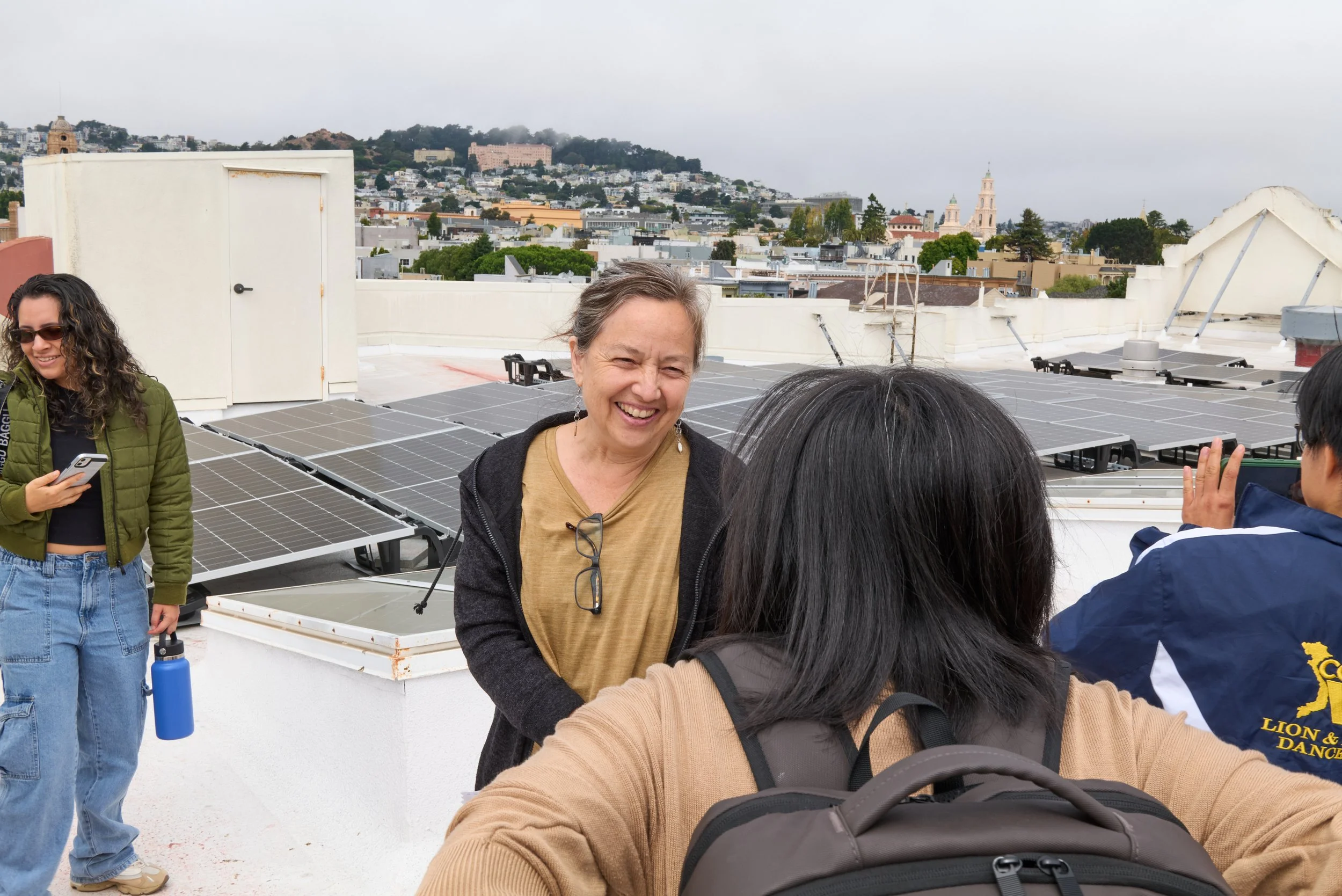
Kelly Lockwood (center, Finance Director of the Women’s Building) shows off the Women’s Building’s rooftop solar array while mentioning how this was part of the founder’s original vision for the community center.
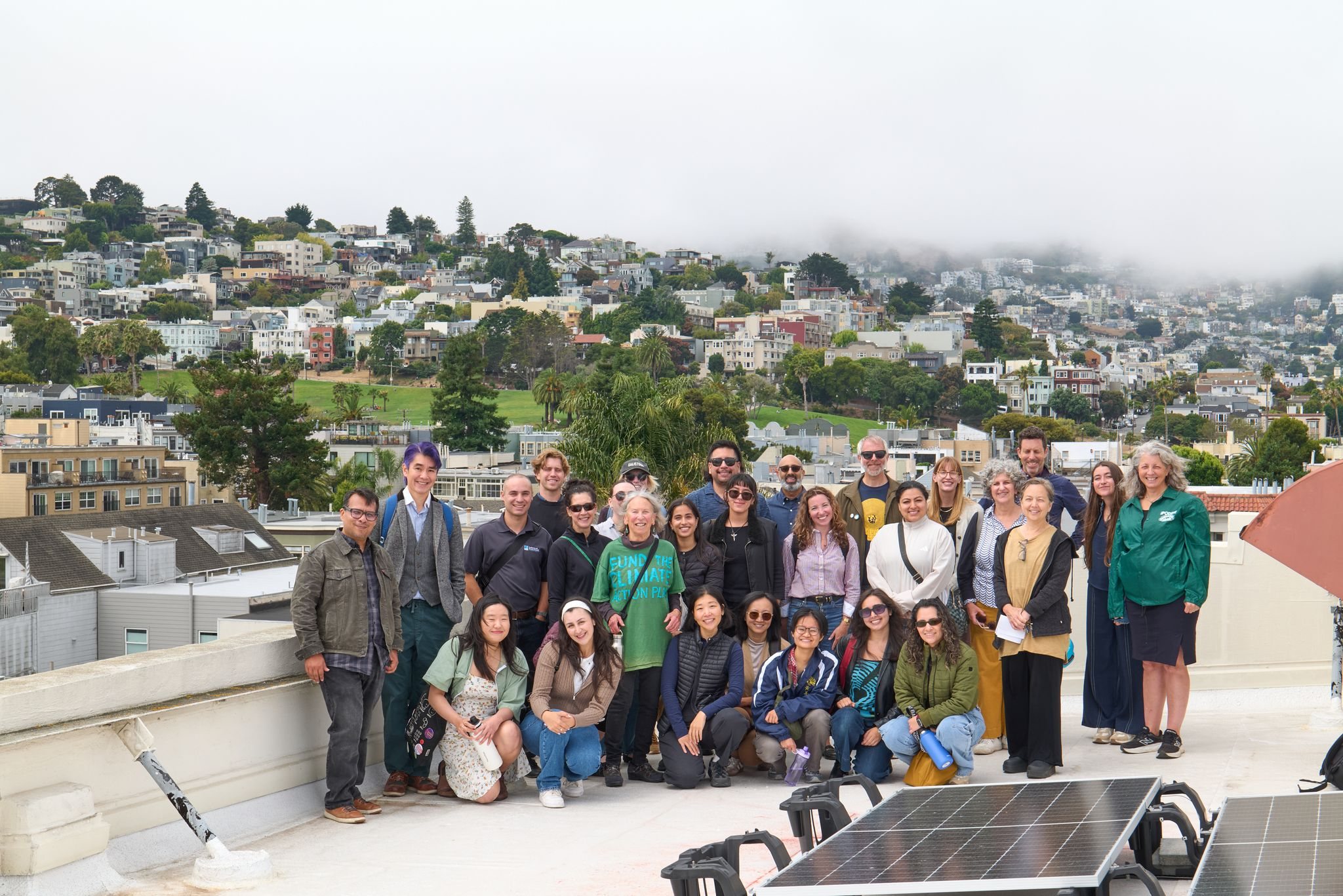
Tour attendees atop the roof of the Women’s Building.
The work of PODER, ECC, and SFE through the HRH campaign drove home key lessons. Co-governance is critical for successful implementation. Without the collaboration between community groups and the city, these three model buildings would not have been completed. SFE not only provided funding, but also technical expertise, education, and fastracked governmental processes to electrify the buildings. The co-governance also creates an appetite to scale. SFE has a vision to scale the HRH campaign to decarbonize and electrify the whole city. The co-governance creates confidence that projects will be completed successfully and have strong public support. Deep involvement of community-based organizations is necessary for high quality installations and resident satisfaction. PODER and ECC provided high-touch, hands-on work with the building owners and the contractors that was necessary for high-quality retrofits. Lastly, San Francisco is ready for an SB1221 neighborhood-scale gas decommissioning project. With their strong partnerships, deep technical expertise, public support, and model homes, partners in San Francisco are ready and excited to host an SB1221 pilot in the Mission and can be an early model for more neighborhood-scale projects to come.
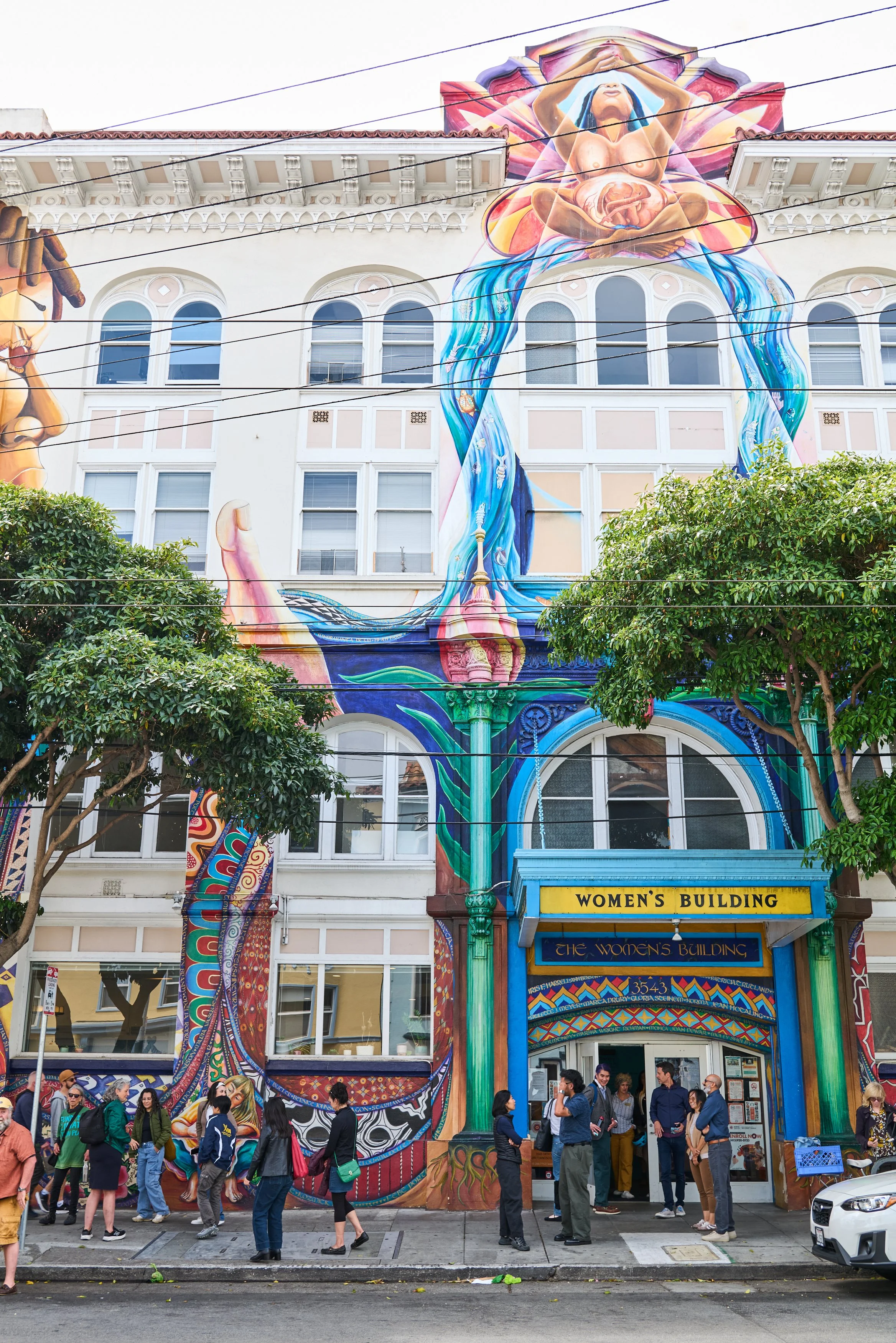
Tour attendees gathering and admiring the murals adorning the Women’s Building.