
New York City Climate Week 2026 Event Recap
September 2026
“Learning from Implementers: Strategies for Scaling Clean Energy Projects”
Hosted by BPRC
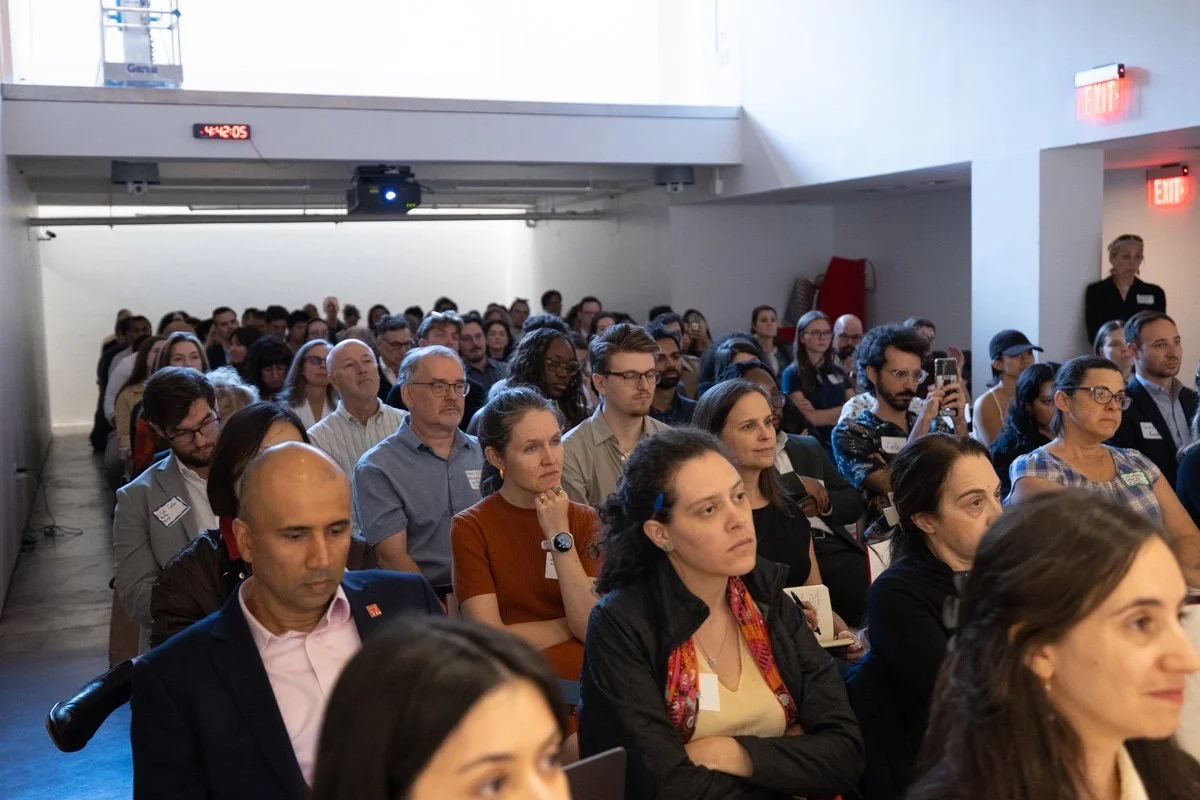
Over 120 attendees joined BPRC to learn from a panel of state and local leaders who are continuing to build clean energy projects during a steep uphill moment of federal disinvestment. BPRC directly supports these leaders and many others throughout the country with technical assistance and other resources, including helping communities access still-available Inflation Reduction Act programs, by advancing campaigns that simultaneously address the climate crisis and the affordability crisis to deliver tangible benefits for working people.
Our speakers represented a rare breadth of perspectives from city, state, and federal levels, as well as from inside and outside of government. Panelists from California, Maine, and Ohio, and New York’s own State Senator Jabari Brisport discussed strategies for winning, building, and scaling decarbonization models. Sharing stories and lessons learned from their various clean energy initiatives, the panel focused on 1) the importance of “inside-outside” organizing approaches to policy implementation and 2) the opportunity for state governments to assume greater leadership in scaling solutions.
Learn more about the event program and key takeaways.
A New Video from BPRC
We kicked off the event by premiering a video showcasing a few of BPRC’s 26 partners working in 14 states: Washington, D.C.; San Francisco, CA; Columbus, OH; and Chicago, IL. We wanted to show what it looks and feels like when community groups, unions, and government leaders team up to lower pollution and bills—major themes that the panel also addressed.
Opening Remarks: How State Governments Can Scale Clean Energy Deployment
Jeremiah Baumann, former Senior Policy Advisor and Director of Policy & Implementation at the U.S Department of Energy, took the podium to reflect on the last 20 years of clean energy implementation and propose solutions for building and scaling durable infrastructure.
Despite the abundance of clean energy resources and common-sense financial, environmental, and health benefits they offer, large-scale deployment and improved management of the grid are not happening, even as the affordability and climate crises loom larger than ever. He said that we could and should treat buildings and the energy resources they have as a major part of our grid, but we are “letting them sit there completely underutilized.”
Baumann suggested that state governments should assume greater leadership to spearhead and streamline this work: “We need to think about this like other utilities, like roads and water, and states need to reassert their authority to steer our energy system. They actually need to step into the role of driving the system we need… There’s a lot of easy things we can do that lots of states already do and plenty of other countries, too.”
He proposed 3 specific ways state governments can step up to drive change: 1) independent and rigorous planning for the grid; 2) streamlining financing; and 3) driving the implementation.
Panel Discussion
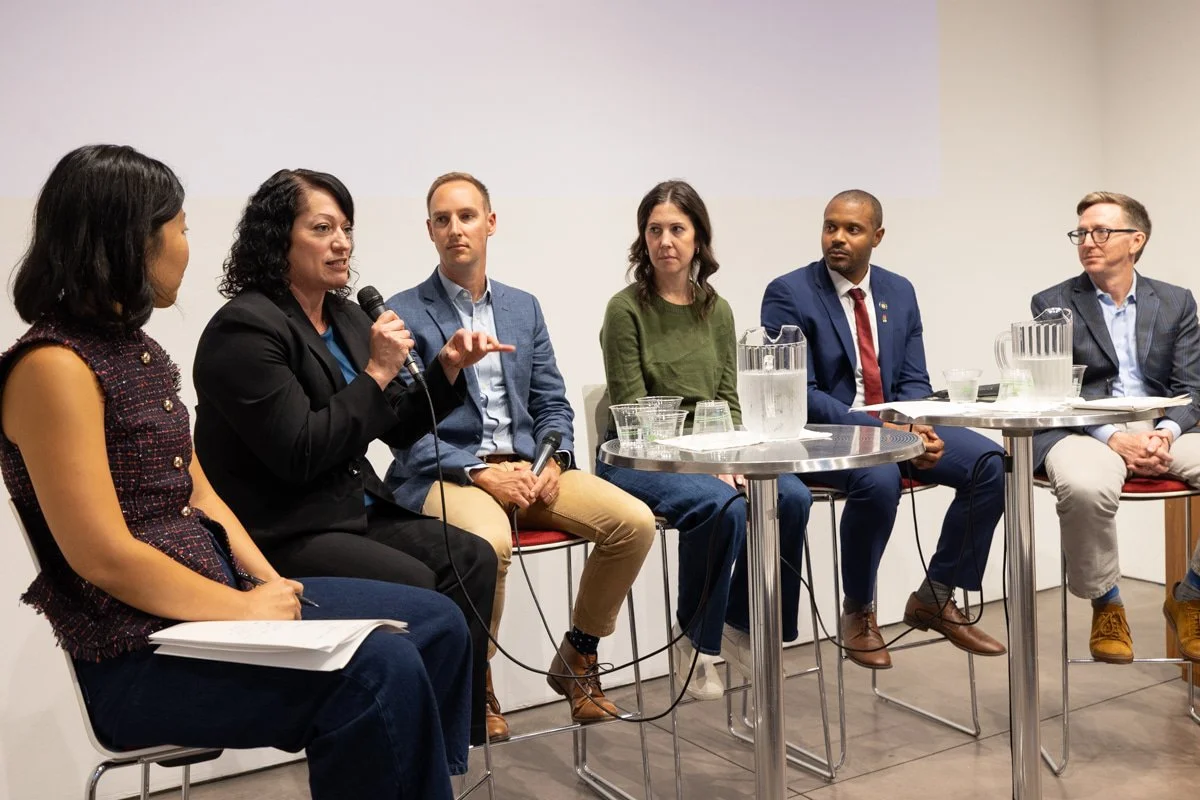
BPRC’s Executive Director Yong Jung Cho moderated a dynamic discussion delving into lessons learned and challenges from initiatives in 4 states that are leveraging climate solutions to address the affordability crisis and transform the future of our homes, schools, neighborhoods, and communities.
Here are the panelists and the initiatives they discussed:
Julie Benabente (Deputy Director, City of San José’s Climate Smart Division): The City of San José and community partners are planning to decommission a gas pipeline by completing a neighborhood-scale electrification project, hopefully as part of a pilot program offered via SB 1221. Residents would benefit from updated appliances, cleaner indoor air, and lower utility bills.
Francis Eanes (Executive Director, Maine Labor Climate Council): Maine Labor Climate Council is organizing tenants in 75 mobile home parks with over 4,000 residents for kerosene to heat pump conversions, starting by passing rent moratoria. The tangible benefits from this work are improved home comfort and lower energy bills for residents and creating more union jobs.
Molly Shack Strickland (Executive Director, Ohio Organizing Collaborative): Ohio Organizing Collaborative won 2 school board policies, passed unanimously by Columbus City Schools, and won 8 school decarbonization projects that will be completed or funded this year. The tangible wins are more comfortable classrooms for students and teachers, as well as more resources for the district to keep educators in the classroom and provide special needs support.
Senator Jabari Brisport (New York State Senate): New York City committed to 50 resilience hubs at public schools, and the Office of Senator Jabari Brisport plans to have 2 of the resilience hubs in his district.
What’s Working Well?
Inside-outside organizing strategies are critical for building the necessary political will to win policies, build projects, and scale solutions. From outside of government, panelists uplifted the importance of using strategies such as: power-mapping key stakeholders’ motivations, investing in robust leadership development, devising a broad agenda and positive long-term vision for the work, creating urgency and exerting pressure to sustain momentum, and creating political wins and positive stories that motivate people in power to champion the work. From inside of government, panelists shared that organizing with colleagues was similarly important for winning policies and bold commitments for their communities and that partnerships with community-based organizations are necessary to push elected officials to advance policies that genuinely center the community’s needs. In addition, regular meetings and communication between “inside” and “outside” groups and collaborating together on concrete projects (e.g., jointly applying for grant funding) are key factors in building productive and trusting working relationships together for successful co-governance.
Building trust through campaigns that address people’s most pressing material needs and leveraging climate solutions in the process is crucial. There are many pressing realities and urgent needs that people are facing, and climate may not be their top priority. Nevertheless, many on the panel are successfully building the political will for clean energy policies by tapping into people’s broader concerns about affordability, safety, and community agency in decision-making—especially in communities that have been historically disinvested. Community organizing, partnering with influencers as trusted messengers, and deep community-engagement were all strategies the panelists named for building trust and public support for adopting clean energy technologies at scale.
Building collaborative partnerships and coalitions that facilitate knowledge-sharing across often-siloed areas of expertise increases capacity for implementation. For example, power-building groups with organizing expertise benefit greatly from partnering with groups, like BPRC, that can provide technical assistance to equip them with the necessary knowledge and capacity to drive implementation.
What Are the Challenges (and Potential Solutions)?
Across our portfolio of partnerships, BPRC has identified 3 common barriers to this work: the lack of 1) a mandate and strong vision, 2) technical assistance, and 3) financing and funding. Our panelists named challenges that resonate with this assessment, while also offering a similar vision to BPRC and Baumann around opportunities to streamline deployment and work from the grid outward, including a one-stop shop state-level entity.
Fragmentation at the state level for building decarbonization makes the work difficult for local implementers. With work scattered across multiple agencies, programs, and statutory authorities, states lack a consolidated one-stop shop and holistic deployment strategy, which would help streamline and scale implementation. Accessibility challenges often mean that the benefits of available programs skew towards individuals and communities who are better resourced and positioned to navigate this tough landscape, exacerbating inequities. Community organizations get squeezed into becoming project managers, when that isn’t their core mission or area of expertise. And state administrators of programs are frustrated in getting dollars out the door to communities. Groups like Maine Labor Climate Council are beginning to facilitate multi-agency meetings to improve coordination.
Winning policy is only half of the fight. Senator Brisport discussed the reality that winning a policy is only half of the fight, and that implementation requires additional collaboration and stamina to see it through.
False narrative that organized labor is seen as an impediment to deployment that will drive up costs and be a barrier to their work. There is a big opportunity to improve the job quality in the residential sector and invest in workforce development by aggregating pipelines of work and baking in labor standards and workforce development incentives.
Panelist Advice for the Audience
Julie Benabente: “Draw on the strengths of the different organizations and groups involved and understand what their interests are and what they want to do…Taking the time up-front in the beginning is probably the most important thing to actually get it [successful implementation] done.”
Francis Eanes: “Fundamentally it’s organizing all the way down. Think like an organizer. There isn’t a shortcut. Yes. We 100% need better programs; we need federal leadership; and we need one-stop shop consolidated state programs for deployment. But at the end of the day, we need to find ways to persuade people to undertake something that they have a lot of skepticism and questions about. If we haven’t figured out a way to build trust with them and address this deeper question of inequality—who owns our communities and who owns our schools and how we fund the basic good society we live in—we’re going to keep running up against the limits of what good policy and implementation can do.”
Molly Shack Strickland: “We need to take this secret sauce formula of an ‘inside-outside’ game and be responsible for governance and for campaigning and building pathways for regular people to own it. If regular people don't see this as a path to improving material conditions in their daily lives, it will not cross the barrier for priority. We have a responsibility to help create that path. Pick a thing that you can build around. Trust gets built through work, not through telling people they can trust you. And so getting started, picking the thing, trying it, seeing what works, and building off of it has been what we’ve learned best around implementation.”
Senator Brisport: “For anyone fighting for resilience hubs, if you are looking for buy-in from legislators or players, remind them that schools are natural anchors in the community and they are critical hubs of resilience and refuge in times of climate emergency… And figure out what your outside strategy is going to look like. What are the groups on the outside that can be doing the agitating? And who are the trusted people on the inside in the halls of power that will be doing the inner organizing as well?”