
October 2026 | by Yong Jung Cho, Executive Director
Earlier this year, I saw Dr. Ayana Elizabeth Johnson’s, a marine biologist and policy expert, “Subway Takes” clip on Instagram. Her take: “We already have the climate solutions we need. We just need to f*cking implement them.” I couldn’t agree with her more.
My background is as an organizer and political strategist. Before launching the Building Power Resource Center (BPRC)—3 years ago next week!—I was the National Field Director for the Green New Deal Network, where I built a network of 24 diverse state-wide coalitions to develop and champion policies at the intersection of jobs, justice, and climate, including what became the Inflation Reduction Act (IRA). Through that experience, I became obsessed with implementation; and I saw that there was little to zero capacity inside of government and within people-powered organizations to implement green industrial policy at the scale and speed we need.
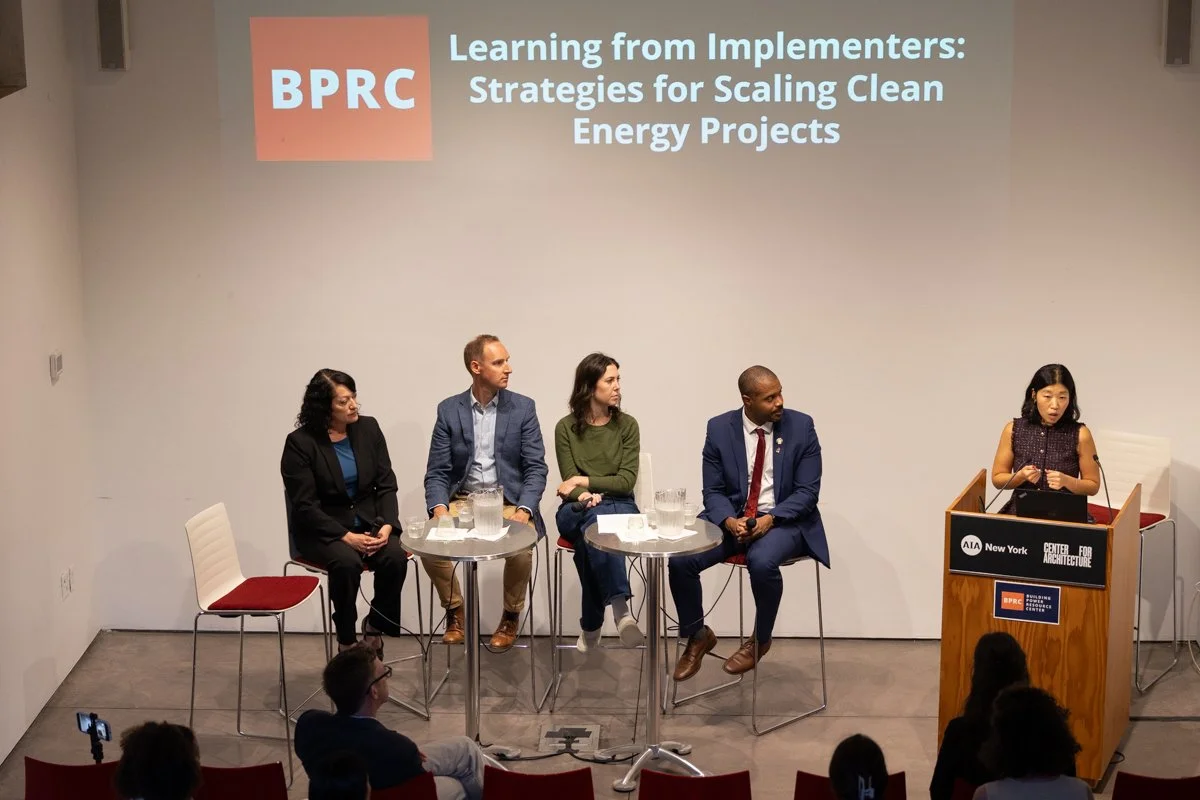
BPRC’s Executive Director (author) speaking at our NY Climate Week event in September 2026.
Since BPRC’s launch, our network of local and state partners—the Building Power Network (BPN)—has grown from 7 to 28 local governments, labor groups, and community organizations. Together, we started construction on hundreds of solar or building decarbonization projects, secured over $100 million in public funds for project development, completed dozens of feasibility studies, and passed 6 local policies setting new decarbonization commitments. We are implementing policy models—including public school decarbonization, mobile home park retrofits, and neighborhood-scale electrification—that deliver immediate and tangible benefits to working people; and replicating campaigns within states and nationwide.
We are proud of the impact our network has made so far, especially since we’ve continued to successfully build new clean energy projects in spite of Trump and his allies gutting federal support. However, our goal ultimately is for our partners to scale this implementation work and have it be so popular that it will be politically costly to ever roll it back. We believe this will only be possible with more grassroots and labor power, increased government capacity, and stronger collaborative relationships on the ground.
When the next major federal climate (economic development) legislation passes, local communities must be better prepared to take advantage of the investments—and that preparation happens now.
A great example of what needs to be built already happened in Utah.
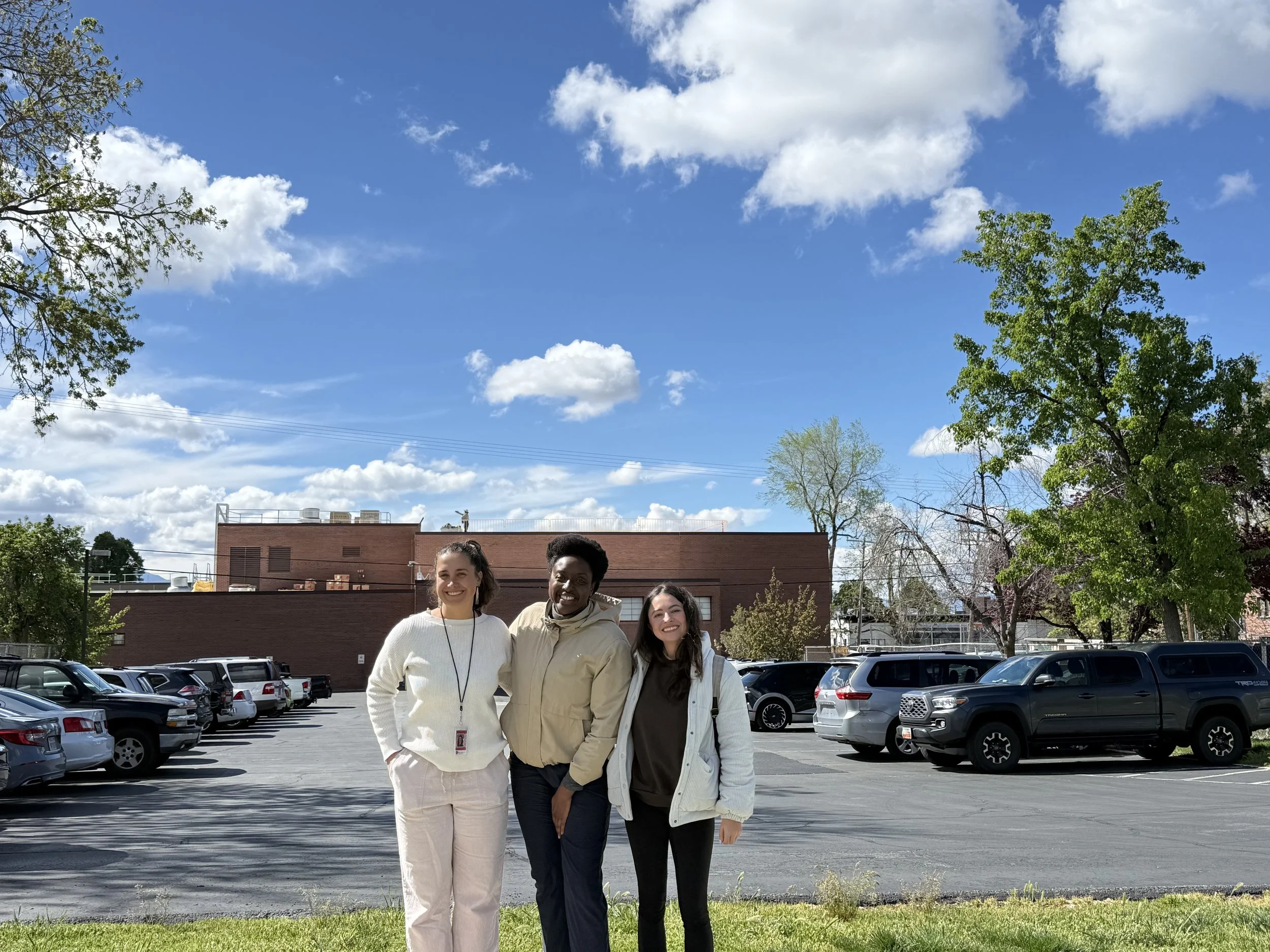
Morgan MacMillan, Energy & Sustainability Manager for Salt Lake City School District, Franque Bains, Sierra Club Utah Chapter Director, and Shannen Maxwell, Policy & Program Manager at BPRC, stand in front of a middle school as it gets rooftop solar in April 2026. (left to right).
Before the IRA passed, a coalition led by student activists in Salt Lake City, Utah, won an ambitious commitment from their school district: 100% clean energy by 2030. Many coalitions would have taken this impressive victory as the end of their work. In Salt Lake City, this group took it as just the beginning.
They continued organizing and focused on implementation. As a result, Salt Lake became one of the first school districts in the country to receive federal clean energy tax credits through the Inflation Reduction Act worth $1.2 million. The district kept building, and 17 school solar projects are now completed. In 2025, the grassroots coalition, along with BPRC’s support, assisted the district in navigating the filing process for federal credits, which resulted in an additional $1.6 million. Critically, we are also celebrating progress as we go. Utah Public Radio covered the news about the $1.6 million federal check to the school district and interviewed an organizer for the story who said, “energy costs are one of the largest expenses for schools and the change to clean energy will help the schools have more funding to go into other parts of education.”
Organizers in Salt Lake City are taking what we call an “inside-outside” approach for their campaign. They are building public pressure and support from the “outside” and working collaboratively with government leaders to implement policies and projects on the “inside.” At BPRC, we are supporting “inside-outside” coalitions across the country through policy, technical, and communications support to simultaneously build power, capacity, and projects.
We have proof this model is working elsewhere. School districts in Columbus, Chicago, and Los Angeles are installing solar panels with community-labor coalitions’ support. Public housing authorities, like in Allegheny County, are retrofitting buildings after demands from residents. In each case, a non-governmental coalition not only played a critical role in making these projects happen, but they are also staying at the table through implementation, working to fill capacity gaps and making sure the benefits of these projects are reaching working people.
The stakes for scaling our capacity for the climate transition are significant. Energy costs are rising for families, making clean energy solutions increasingly urgent within a broader national affordability crisis. Community organizations can support local governments in feeding the project pipeline from the bottom up, and states can enable scale by supporting project development concurrently from the top down (a topic of a future piece).
Salt Lake City’s success demonstrates how sustained community engagement, coupled with public sector leadership and capacity, can deliver bold change in a short time. As we face at least two more years of White House hostility on climate, this work is a light in the dark – it shows progress is still possible at the state and local level.
But this work is also a nod to the future. If we can build up the capacity of our local governments and our local community groups now, then when we get our next shot at federal climate change legislation, we won’t miss.
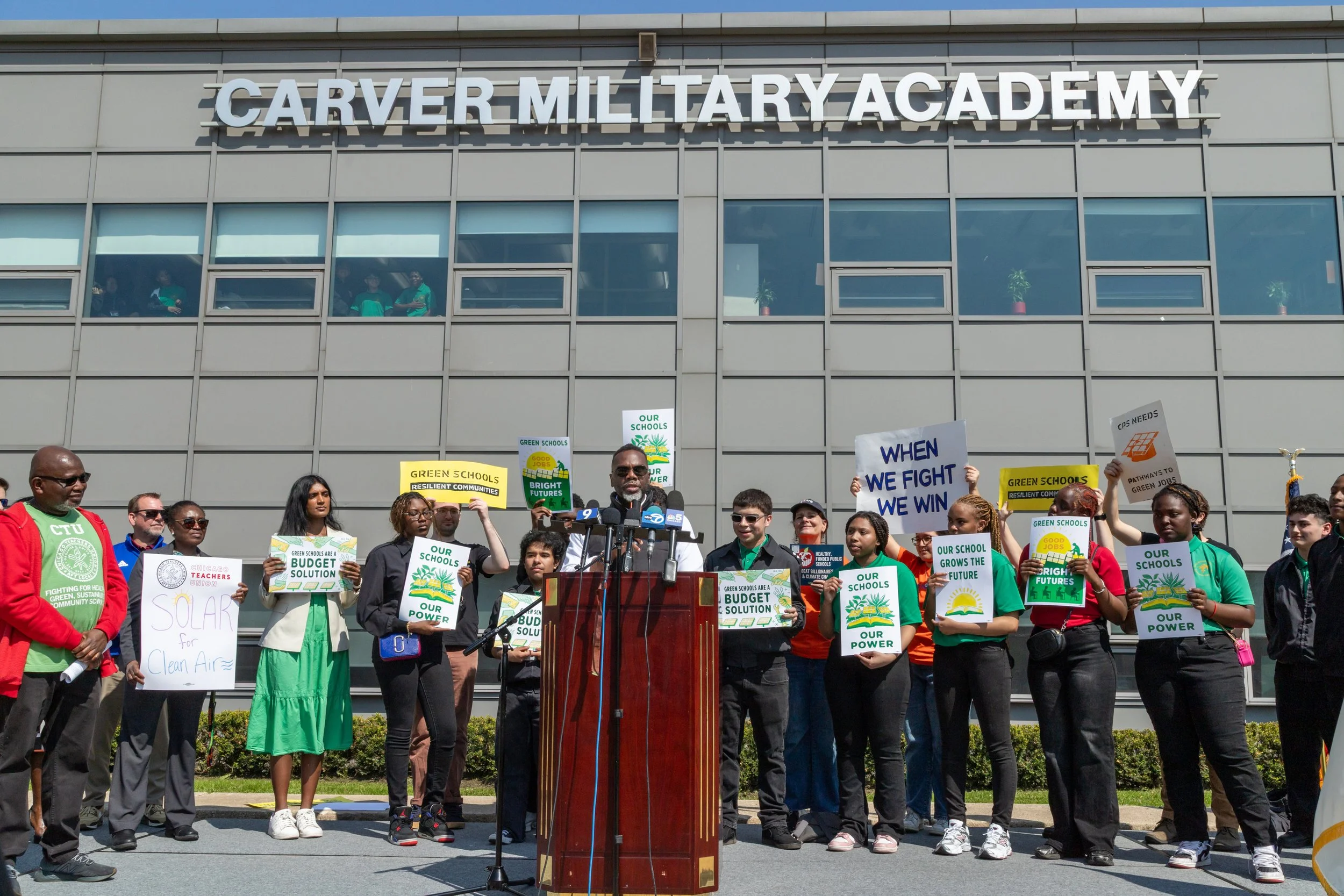
Chicago Mayor Brandon Johnson speaking at a rally with the Chicago Teachers Union (CTU) and School Board Member Anusha Thotakura in front of a high school that will be installed with solar in 2026.
//
Read this piece on our Substack: https://substack.com/@buildingresource. Please subscribe and share! In a future piece, we’ll share what state governments can do to support local capacity building.