
October 2026 | by Shannen Maxwell, Policy & Program Manager & Chelsea Watson, Senior Program Director
The back-to-school season this year was far from business as usual.
Schools across the country, from California to Wisconsin, sent students home due to grueling heat waves and unsafe building temperatures. In Troy, Ohio, where only one of nine school buildings has air conditioning, students marked the district’s 15th heat-related early dismissal in the last seven years. And nationwide, school districts are facing severe budget deficits as costs rise and funding challenges persist.
In the face of dual climate and affordability crises, partners in the Building Power Network have spent the season organizing communities and building partnerships with decisionmakers to address school districts’ urgent challenges.
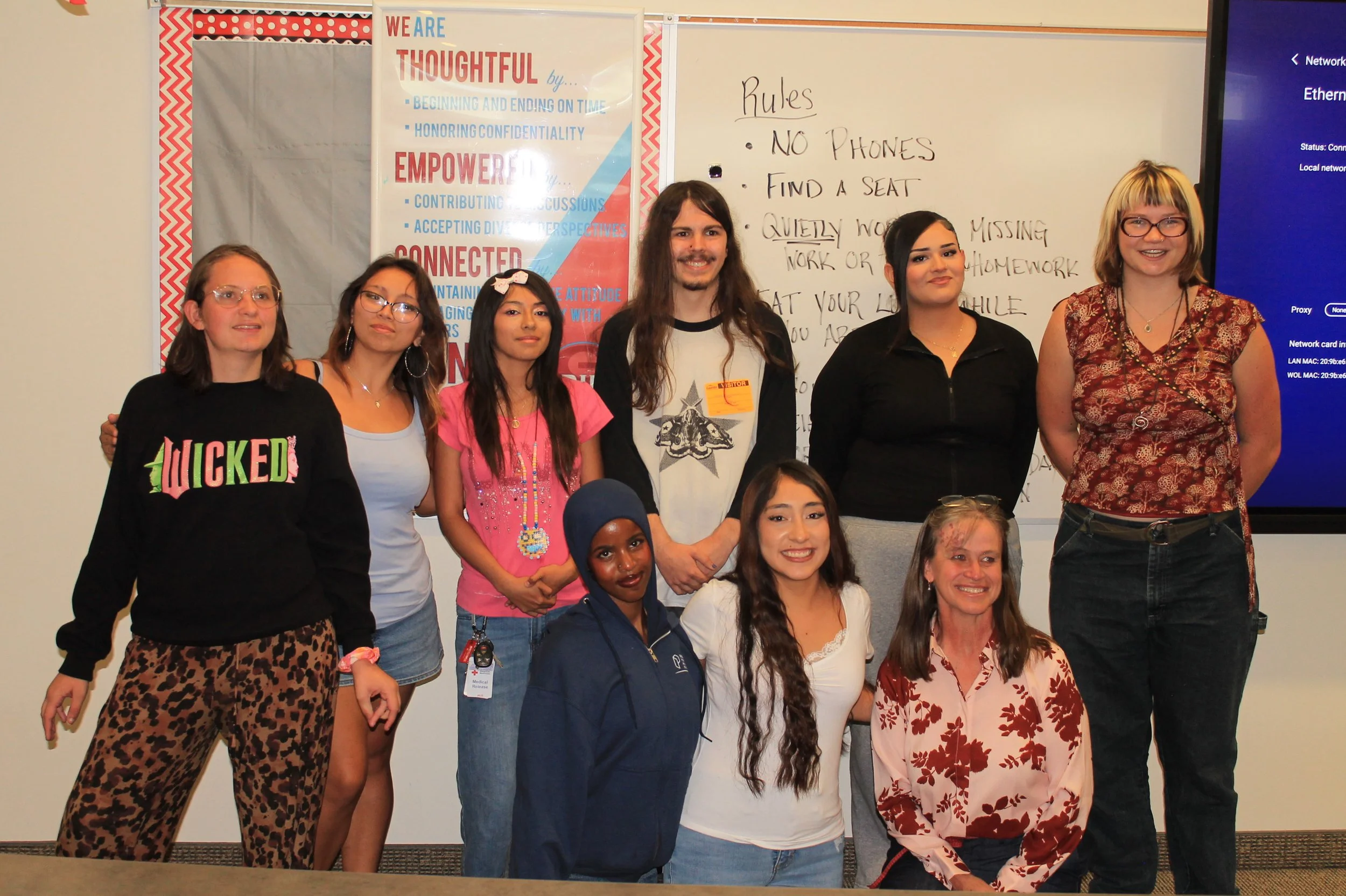
Students pose with Granite School District Board of Education member Julie Jackson after presenting at the October Clean Energy Town Hall.
In West Valley City, Utah, organizing fellows with the Sierra Club Utah Chapter spent the summer launching a clean energy campaign in Granite School District. Their campaign crescendoed in early October with a student-led town hall at Granger High, which brought together 30 students from three schools across the district, as well as Granite School Board member Julie Jackson. At the town hall, six students shared personal stories about the health and learning impacts of air pollution. They called on the school board to pass a resolution committing to 100% clean electricity. BPRC has supported the Sierra Club Utah Chapter in its clean energy schools campaign work across the state since 2025.
In Aurora, Colorado, community organizing is helping bring major clean energy investments to light. Following the approval of a $1 billion bond in 2024, Aurora Public Schools completed a 1.1 MW solar installation, guaranteeing $430,000 in annual savings! The District also successfully safe-harbored $18 million in additional solar for five high schools, meaning the projects will be eligible for over $6 million in elective pay (a federal reimbursement check).
These investments became public for the first time in September, after months of organizing by COPA, with the support of BPRC. Through public comments at school board meetings and meeting directly with district leaders, COPA successfully pushed APS to publicly report on its clean energy work and bond projects. Brett Johnson, APS Chief Financial and Operating Officer, presented at the September school board meeting, following COPA’s own presentation to the school board on their Green & Healthy Schools campaign.
At the Chicago Teachers Union’s House of Delegates meeting in early September, teachers and students celebrated their green healthy schools accomplishments in a packed union hall. Recent wins include a pilot solar project at Carver Military High School in the Altgeld Gardens neighborhood, a historic center of environmental justice activism on the far south side of Chicago. In addition, six CPS high school students worked on clean energy projects through paid summer internships in partnership with IBEW, and one high school senior shared he had received a job offer as a result of the internship. BPRC has supported the Green Healthy Schools coalition since 2024 in everything from campaign strategy, press and media, solar feasibility assessments to supporting the design of the pilot program.
In El Paso, Texas Amanecer won immediate cooling plans to ensure that students would have relief from the sweltering heat waves and hot classrooms as they returned to school this August. Principals from across the district expressed great relief at the implementation of the plan, and hundreds of students and teachers benefited from cooler classrooms. BPRC supported Amanecer and EPISD in creating, passing, and implementing the sustainability policy that led to these changes.
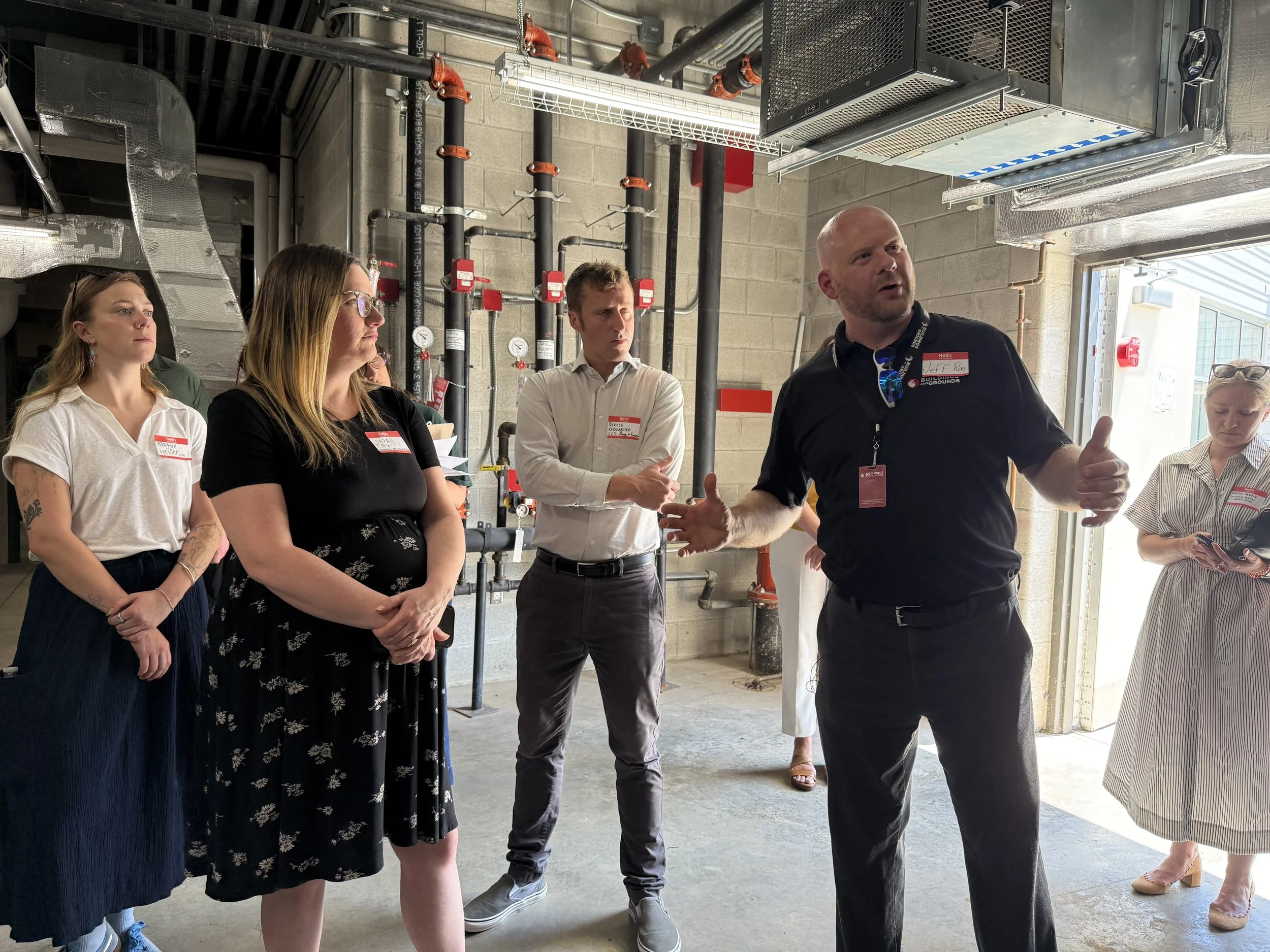
Jeff Roe, Director of Buildings & Grounds at Columbus City Schools, leads a tour of a geothermal heat pump system.
And in Columbus, Ohio BPRC co-organized with our partners Ohio Organizing Collaborative, Columbus City Schools, and UndauntedK12 to get a behind-the-scenes look at something most students and families never see: a school being heated and cooled by the ground beneath it. In August, we toured one of the district’s six geothermal heat pump systems. Parents, community members, and municipal leaders from across the state came together to see how geothermal is reducing energy costs and keeping students comfortable during extreme temperatures.
Communities shouldn’t have to choose between safe, healthy classrooms and a balanced school budget. And as our partners are proving, they can have both.
Every solar array, geothermal system, and clean energy resolution is a win for students’ health, for district finances, and for the climate.
But these wins don’t happen on their own. They happen because parents, students, educators, and community members organize, speak up, and work with decisionmakers to deliver for our schools.
//
Read this article on our Substack: https://substack.com/@buildingresource. Please subscribe and share!